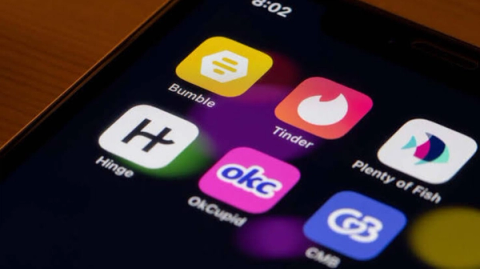

She deletes the apps off her phone on a Sunday night, the same routine she's done twice before, except this time she doesn't reinstall them a week later. Instead she signs up for a Wednesday evening walking group along the Katy Trail that a friend mentioned, a dozen strangers, no profiles, no swiping, just people showing up in person because they're tired of doing this the other way.
The common assumption is that apps are still where Dallas singles are actually meeting people. Increasingly, the numbers, and a real local example, say otherwise.
The burnout numbers behind the shift
A Forbes Health survey found 78 percent of active dating app users report feeling burned out, with the number climbing even higher among Gen Z users, more than half of whom say they're often or always burned out [1]. Women report it more than men, 80 percent versus 74 percent, and the average user is spending more than fifty minutes a day on these apps for a return most describe as disappointing [1]. The top reason cited isn't ghosting or catfishing, real as those are. It's simpler and more damning: an inability to find an actual connection [1].
That's not a small complaint tucked into a survey footnote. That's most of the people using these apps telling researchers, in plain language, that the product isn't delivering the thing it's supposed to deliver.
Where that burnout is actually going
Burnout on its own doesn't necessarily change behavior. People can be exhausted by something and keep doing it anyway, out of habit or lack of an alternative. What's different now is that there's a real, measured alternative absorbing that exhaustion. Eventbrite's own data on singles events found mixer and dating-event attendance rose 42 percent from 2023 to 2024, with game-based singles events growing four times over and comedy-paired dating events up 181 percent [2]. Seventy-two percent of active daters surveyed said they now prioritize fun over formality when picking how to meet someone new [2].
That's Eventbrite's own platform data, worth reading as a company reporting on its own trend rather than neutral third-party research. But it lines up with what's independently showing up in local press coverage across the country, which is a much stronger signal than one company's numbers alone.
Dallas already has its own version of this
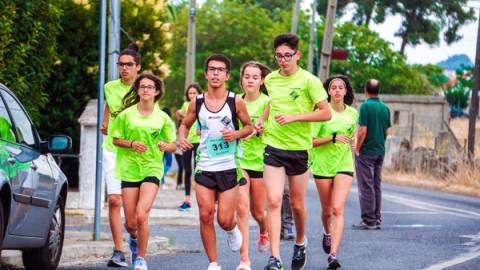
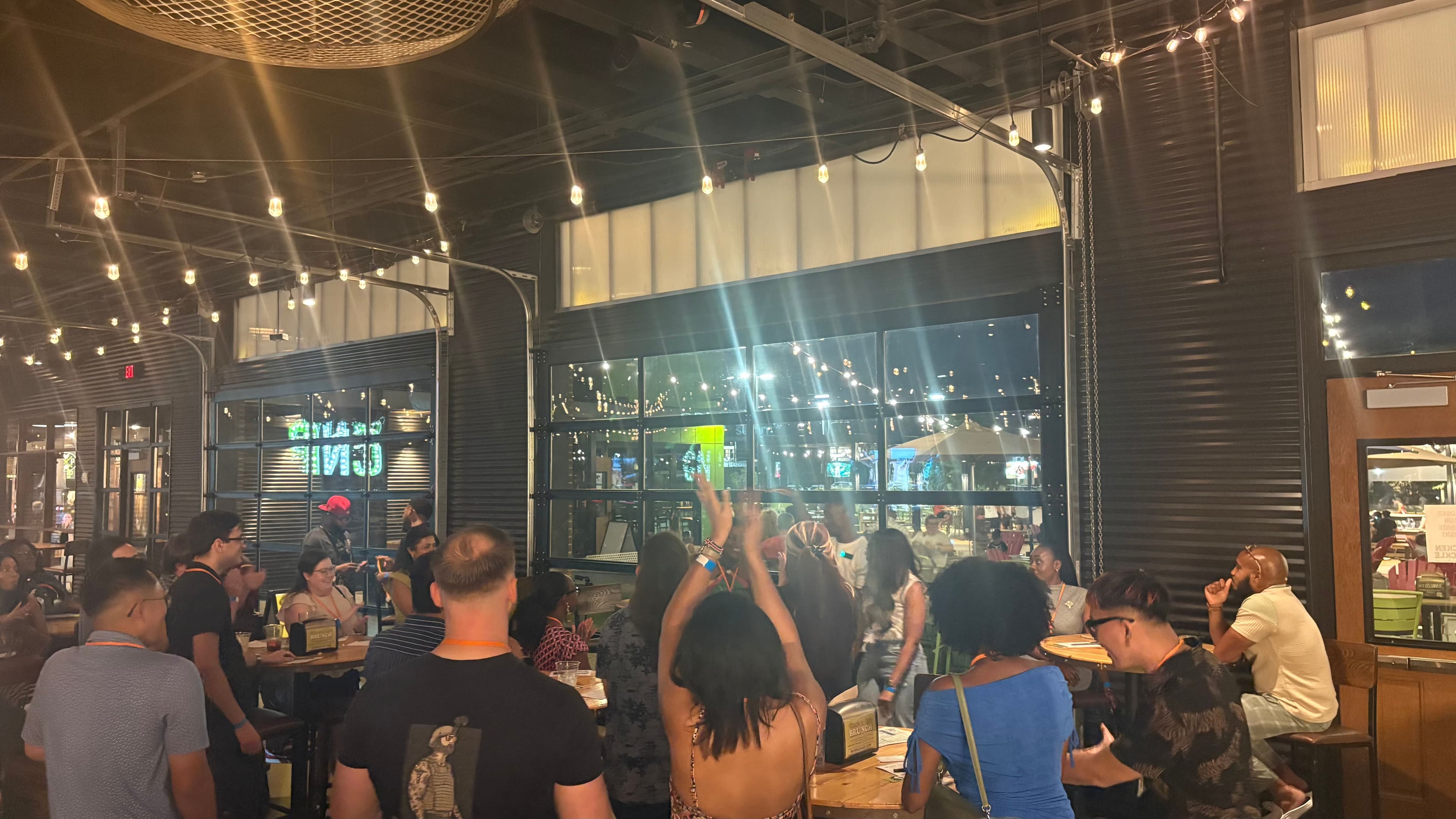
This isn't a trend Dallas is waiting to catch up to. NBC 5 DFW covered a real, grassroots Dallas singles event series called Datey, which started as an informal Katy Trail walking group and grew into a genuine in-person alternative to swiping for local singles [3]. It didn't start as a company or a marketing campaign. It started because enough people in Dallas wanted an actual room full of other singles instead of another profile grid, and enough of them showed up that it became a real, recurring thing.
That's a meaningful detail. Grassroots momentum, people organizing their own alternative without waiting for a company to build one for them, is a much stronger signal of genuine demand than a survey question ever could be. It also means Beyond The Sparks isn't trying to convince Dallas singles that in-person dating is worth trying. A meaningful number of them have already answered that question for themselves, on a Wednesday night, on a trail, with no company involved at all.
There's a practical lesson in how Datey grew, too. It didn't scale by advertising harder. It scaled because the first few walks were good enough that people brought friends the next time, and those friends brought more friends after that. Word of mouth is a slow mechanism compared to a marketing budget, but it's also the most honest signal a format can get. Nobody keeps showing up to something that isn't actually working, and nobody keeps inviting friends to something they're embarrassed by.
A city can have thousands of people swiping every night and still be full of singles quietly organizing their own way out of it.
This isn't just a Dallas thing, but Dallas is already living it
The same narrative has been independently covered by Axios in Washington D.C., Seattle, Columbus, and San Antonio, each piece describing local singles abandoning the apps in favor of structured in-person events [4]. That's not one journalist's pet theory. That's a national outlet running the same real story in city after city, because the underlying shift is showing up in enough places to be a pattern rather than a fluke.
Psychology Today covered the mechanics of the shift directly in a piece titled "Swiping With Agency: Beating Dating App Fatigue," addressing how people are learning to reclaim intentionality in how they date rather than defaulting to the algorithm [5]. Northwestern's Medill Reports covered the industry side of the same story, describing an environment where digital matching platforms are scrambling to prove they can still deliver meaningful connection at all, as user enthusiasm visibly dims [6]. When the journalism school covering the industry itself is writing headlines about burnout, the shift isn't a media narrative being manufactured. It's catching up to something that's already happened.
Why in-person actually solves what the apps couldn't
There's a real reason the room works better than the feed, and it's not just novelty. A landmark study on choice overload found that past a certain point, an abundance of unfiltered options makes people less satisfied with whatever they eventually pick, not more, and less likely to commit to it at all [7]. An endless swipe feed is the purest version of that problem. A Wednesday night walking group, or a structured event with a fixed guest list, removes the overload by design. You're choosing from the people actually in the room, not scrolling an infinite queue that always promises something slightly better one swipe away.
There's also a well-documented psychological cost to the apps that a shared, structured setting sidesteps almost entirely. The constant low-grade self-presentation swiping requires, curating a profile, managing an inbox, performing interest, keeps people in a state of low-key self-consciousness that rarely produces the kind of genuine connection an in-person setting makes possible almost by accident, over a shared activity where nobody's thinking about their profile photo.
That constant self-presentation has a compounding cost most people underestimate. Every profile edit, every carefully worded opening message, every decision about which photo to lead with is a small act of performance repeated dozens or hundreds of times a week across an active dating app user's inbox. None of that effort is wasted exactly, but almost none of it produces the thing it's aimed at either. A single evening in a room full of people who've already been sorted for real compatibility replaces weeks of that performance with one conversation that either works or doesn't, decided in real time instead of across an asynchronous back-and-forth that can drag on for days before either person learns anything real about the other.
The apps aren't disappearing, but the default is changing
None of this means dating apps vanish overnight, or that nobody in Dallas is still swiping. What's changing is which option people reach for first. For years, downloading an app was the default first move for anyone newly single. What the burnout data, the Eventbrite numbers, and Dallas's own grassroots events point to is a real shift in that default, from "open the app" to "find the room," even if the app stays installed as a backup.
That distinction matters more than it sounds. A default isn't a single decision. It's the option someone reaches for automatically, without weighing alternatives, dozens of times over the course of being single. Shifting that default even partially toward in-person options compounds over months in a way a single survey question can't fully capture, and it's exactly the kind of shift that shows up first as grassroots momentum, a Katy Trail walking group turning into a real recurring event, before it shows up in any official industry report.
What "in-person" actually covers beyond one walking group
Datey is the most visible local example, but it's not the only shape this shift is taking in Dallas and Fort Worth. Trivia nights, run clubs, pickleball meetups, and structured mixers have all seen real growth as first-date and first-meeting formats, each one solving the same underlying problem the apps never fixed: putting people in a shared, low-pressure context instead of an asynchronous, endlessly scrollable one. None of these formats require an app at all. Most of them require showing up once and seeing who else did the same thing.
What this looks like done with actual structure
Datey and the events like it prove the demand is real and already organizing itself in Dallas without anyone's help. What most of these grassroots alternatives don't have is a compatibility layer underneath them. A walking group gets you in a room with other singles. It doesn't tell you which of them you're actually likely to be compatible with before you start talking.
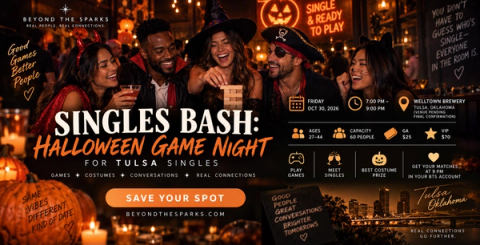
That's the piece Beyond The Sparks adds to a shift that's already happening on its own. Every guest takes the free SPARK Quiz first, sorted across five real compatibility dimensions, social energy style, partnership values, attachment pattern, relationship vision, and conflict or connection style, before ever walking into an event. The room is still real, still in-person, still built around the exact impulse driving Dallas singles toward Datey and events like it. It just adds the filtering step apps promised and never actually delivered.
Think of it as the difference between showing up to a general walking group hoping someone in it happens to be compatible, and showing up to a room where compatibility was already checked before anyone arrived. Both are real improvements over another night of swiping. Only one of them removes the guesswork entirely.
What this means for the September launch
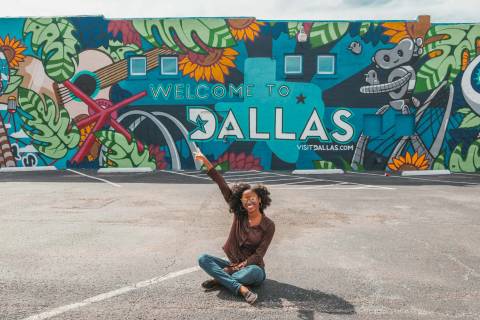
This is worth saying plainly, because it changes what a September launch actually is. It isn't a bet that Dallas will warm up to a new idea. It's a bet on a behavior that's already proven itself, repeatedly, without any outside help, and simply hasn't had a compatibility layer built underneath it yet. Beyond The Sparks isn't introducing Dallas to a new behavior in September. Dallas singles are already doing this, organizing their own walking groups, showing up to game nights and comedy-paired mixers, choosing a real room over another night of swiping. What's launching this September is a structured, compatibility-verified version of exactly what's already underway, at Cabin Boys-style events reaching the full DFW metro, not a foreign concept being introduced to a market that isn't ready for it.
The apps had years to solve the problem Datey solved for free, on a Wednesday, with a group chat and a meeting point. They didn't. That gap is exactly what a compatibility-first, in-person model is built to close, not by inventing a new habit, but by making the one Dallas has already proven out actually work as well as it should.
Take the SPARK Quiz at beyondthesparks.com. Five minutes, and it's the filtering step the rest of this shift has been missing.
We'll see you in Dallas this September, at whichever venue ends up hosting the first night, walking distance from downtown or not.
Sources
1. Forbes Health, Dating App Burnout Survey, 2025. https://www.forbes.com/health/dating/dating-app-fatigue/
2. Eventbrite, "Niche to Meet You" report, 2024. https://investor.eventbrite.com/press-releases/press-releases-details/2024/Eventbrites-New-Report-Reveals-Why-Singles-Are-Shifting-from-Online-to-Offline-Dating-in-Favor-of-Shared-Experiences/default.aspx
3. NBC 5 DFW, coverage of Datey, a Dallas in-person singles event series. https://www.nbcdfw.com/video/news/local/dallas-dating-event-datey-brings-singles-offline-and-in-person/3910406/
4. Axios, local coverage of singles shifting from apps to in-person events, Washington D.C., Seattle, Columbus, and San Antonio editions. https://www.axios.com/local/washington-dc/2024/05/06/dating-apps-burnout-singles-events
5. Psychology Today, "Swiping With Agency: Beating Dating App Fatigue," February 2025. https://www.psychologytoday.com/us/blog/sex-esteem/202502/swiping-with-agency-beating-dating-app-fatigue
6. Medill Reports Northwestern, "The Bumble Burnout: As Dating App Enthusiasm Dims, Industry Scrambles to Prove Digital Matching Can Still Deliver Meaningful Connections." https://news.medill.northwestern.edu/chicago/the-bumble-burnout-as-dating-app-enthusiasm-dims-industry-scrambles-to-prove-digital-matching-can-still-deliver-meaningful-connections/
7. Iyengar, S. S., & Lepper, M. R. (2000). When choice is demotivating: Can one desire too much of a good thing? Journal of Personality and Social Psychology, 79(6), 995-1006. https://doi.org/10.1037/0022-3514.79.6.995
8. Beyond The Sparks, "Every City Beyond The Sparks Serves, and What You Get in Each One." https://beyondthesparks.com/blog/cities-beyond-the-sparks-serves-tulsa-okc-dallas
Frequently Asked Questions
78 percent of active dating app users report burnout, according to a Forbes Health survey, with the number even higher among Gen Z users and women reporting it more than men.
Datey, a real Dallas singles event series covered by NBC 5 DFW, started as an informal Katy Trail walking group and grew into a genuine in-person alternative to swiping for local singles.
It adds a compatibility layer, the free SPARK Quiz, before the in-person event, so guests aren't just in a room with other singles, they're matched with people they're actually likely to be compatible with.
Ready to Find Your Match in Tulsa?
Take the free SPARK Quiz and join us at our next event. Everyone leaves with at least one match.
Start Your Free SPARK Quiz →