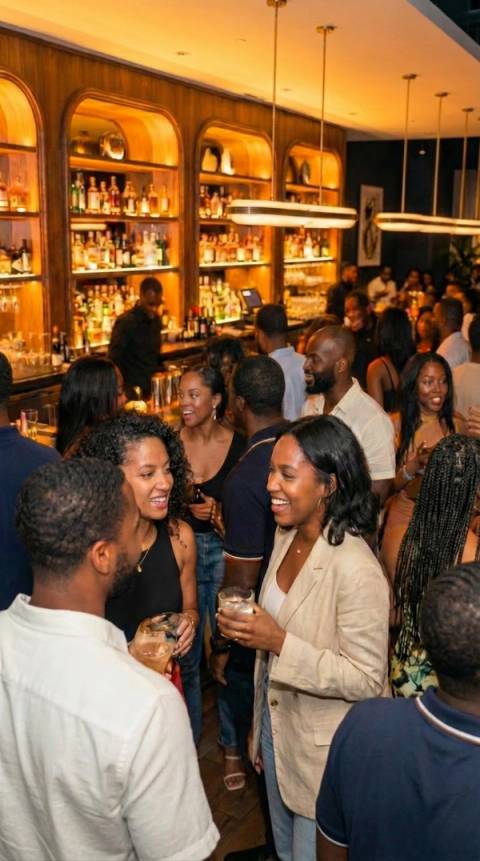
We have been hosting Beyond The Sparks at Cabin Boys Brewpub in downtown Tulsa for a little over a month now. The feedback has been better than we expected. The match rate has held at 100 percent. And we have learned some things about Tulsa singles, about the room, and about ourselves that we did not fully understand when we started.
This post is the honest version of those lessons. Not the polished founder pitch. Just what surprised us, what we got right by accident, and what we are going to change going forward.
We are also going to connect a few of these moments to what dating researchers have been saying for years. Because we are not the first people to notice that something is broken about how singles meet right now, and we are not the only ones noticing what tends to fix it.
Lesson 1, The Match Guarantee Changes the Energy of the Whole Room
We knew the guarantee would matter on the marketing side. People want to know that showing up is not a coin flip. What we did not anticipate was how much it would change the actual atmosphere inside the brewpub.
When people know they will leave with at least one match no matter what, the stakes of any single conversation drop through the floor. You are not auditioning. You are not running a mental cost-benefit on whether to keep talking to this person or scan the room for a better option. You are just sitting across from someone interesting and being a person.
That shift, from performance to presence, is the most valuable thing the guarantee produces. The match itself is nice. The fact that guests can relax into the night and be themselves while getting that match is the thing we are actually proud of.
Researchers who study modern dating burnout have been pointing at the same problem from the other direction. A 2024 Forbes Health and OnePoll survey of 1,000 American dating app users found that 78 percent reported feeling emotionally, mentally, or physically exhausted by the apps [1]. The top reason cited was the inability to find a good connection, named by 40 percent of respondents [1]. Rejection, repetitive conversations, and endless swiping rounded out the list [1].
What that tells us, and what our guests keep telling us in different words, is that the exhaustion is not really about dating. It is about dating in a format where every interaction feels like an audition with low odds. Remove the audition pressure and people show up differently.
Lesson 2, Cabin Boys Is Doing More Compatibility Work Than We Are
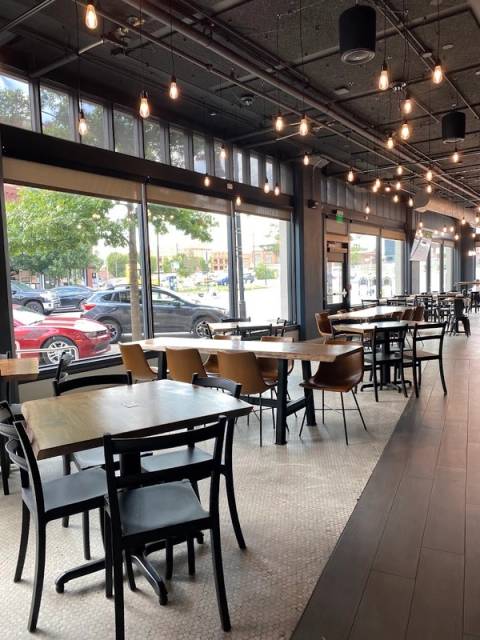
We chose Cabin Boys for reasons we could articulate. The location in the Tulsa Arts District. The walkability. The quality of the beer. The staff who treat regulars like family. What we underestimated was how much of the connection work the venue itself ends up doing.
The warmth of the room matters. The way the lighting softens after sunset matters. The fact that the bartenders remember names matters. All of this is genuinely doing compatibility work that we cannot take credit for.
One guest told us after her first event, "I think I would have been nervous anywhere else. But Cabin Boys felt like a place where being real was normal." That is the venue talking, not us.
Sociologists have a name for what Cabin Boys is. Ray Oldenburg called it a third place in his 1989 book The Great Good Place, meaning a public space that is neither home nor work and that hosts regular, voluntary, informal gatherings of people [2]. Oldenburg argued that third places are anchors of community life and that they make broader, more creative human interaction possible [2].
Robert Putnam, writing in Bowling Alone, made the companion argument. American social capital has been eroding for decades because the institutions that used to bring strangers into the same room, churches and bowling leagues and civic clubs, have thinned out [3]. The places where you used to bump into someone new and end up in conversation are mostly gone.
So when we put compatibility-matched singles inside a working third place, we are not just running an event. We are borrowing decades of accumulated atmosphere. Cabin Boys built the conditions for connection long before we showed up. We are grateful for it, and we should probably say so more often.
Lesson 3, Tulsa Singles Are Way More Ready Than the Apps Suggested
This is the lesson that has moved us the most. The story you hear about modern dating, nationally and locally, is that people are checked out. Guarded. Done. And on the apps, they are.
But bring those same people into a room at Cabin Boys, tell them the matching has already been handled by the SPARK Quiz, and something opens up fast. Shoulders drop. Eye contact lasts longer. People laugh at jokes that would have died in a DM thread.
Tulsa singles are not the problem. The format was the problem.
Attachment researchers would not be surprised by what we are seeing. Cindy Hazan and Phillip Shaver published a landmark paper in 1987 arguing that adult romantic love is best understood as an attachment process, similar in shape to the bonds infants form with caregivers [4]. They found that about 60 percent of adults are securely attached, around 20 percent avoidant, and around 20 percent anxious-resistant [4].
What that means in practice is that most people walking through the door at Cabin Boys are wired to bond, given the right conditions. The apps strip those conditions away. No tone of voice, no body language, no shared room. Of course people show up guarded. There is nothing safe to attach to on a screen.
Put the right people in the right room, remove the performance pressure, and the city is full of people who are ready to connect. We have seen it night after night, and it has changed how we talk about what we are building.
Lesson 4, The Post-Event Community Is Becoming Its Own Thing
Here is something we did not plan for. The people who come to Beyond The Sparks events are starting to form a community of their own, separate from any specific match.
They run into each other at the next event. They wave across the room. A few have become real friends even when the romantic spark went somewhere else. Some have started showing up to Cabin Boys on non-event nights and recognizing each other at the bar.
The community is a byproduct of what we built. And it might end up being as valuable as the matches themselves.
This also lines up with the broader research on third places. When the same humans return to the same warm room with some regularity, the room starts to do social work that goes beyond the original reason anyone came. Oldenburg argued this is exactly how informal community gets stitched back together in cities that have lost it [2].
We are going to lean into that. More repeat-friendly programming. More acknowledgment of returning faces. Maybe a small ritual for guests on their third event. We are still figuring out the shape, but we want to honor the community that is forming.
Lesson 5, One Event Is Almost Never the Whole Story
When we launched, we framed the value proposition around a single night. Show up, get matched, walk out with a connection. And that does happen.
But we have started to notice a pattern. The guests who report the best long-term outcomes are usually the ones who came back for a second or third event.
That is not a sales pitch. It is just true.
Some of it is statistics. Researchers at the University of Montana ran five speed dating events in late 2024, producing 394 individual dates and 65 matches, for a roughly 16.5 percent match rate per pairing [5]. Most academic speed dating research lands in a similar range. The takeaway is that any single event, even a well-run one, produces a meaningful chance at a match but not a certainty of the right match.
Our 100 percent guarantee solves the certainty problem. Everyone leaves with someone. But finding the right someone, the one who actually fits the life you want, sometimes takes a few rooms.
We need to be honest about that. The honest pitch is that one Beyond The Sparks night will probably introduce you to someone worth your time. Three nights will probably introduce you to someone worth building something with.
Lesson 6, The Quiz Is Doing More Than We Tell People
The SPARK Quiz takes about five minutes. People sometimes joke about how short it is. "How can five minutes possibly know who I am?"
Fair question. The answer is that the quiz is not trying to capture every dimension of who you are. It is trying to surface the small handful of signals that reliably predict whether two people can hold a conversation, share values that matter to them, and want similar kinds of weekends.
That is a much smaller job than the apps try to do, and that is the point.
When we sit at the bar after an event and watch matched pairs talk, the conversations almost always have the same shape. Easy opening, shared reference point, then a real question within the first ten minutes. The quiz is not predicting chemistry. It is removing the friction that usually keeps chemistry from getting a chance.
We are going to start being more transparent about what the quiz is and what it is not. It is not magic. It is a pre-filter that makes the room work.
Lesson 7, The Founders Cannot Be the Center of the Story
This one is for us, not for you.
When we started, Daquan and I were the face of every event. We greeted everyone. We did the opening remarks. We hovered. We meant well, but we were too present.
The events have gotten better as we have gotten quieter. The Cabin Boys staff handles more of the welcome. The room handles more of the energy. Guests handle more of each other. We are still there, still responsible for the night going well, but we have stopped trying to be the main character.
If you are building anything where the value lives in the interaction between strangers, the worst thing you can do is keep narrating it. Set the conditions. Then get out of the way.
What We Are Changing Going Forward
A short list, so you can hold us to it.
We are adding more events per month because demand is outpacing what we can host. We are keeping each one small so the room still feels like Cabin Boys and not a conference.
We are building light-touch ways for repeat guests to keep finding each other, because the community has earned it.
We are going to talk more openly about the data. Match rates, return rates, what works, what does not. If we are going to ask Tulsa to trust us with their love lives, the least we can do is show our work.
And we are going to keep choosing presence over performance, in our own behavior at events first.
If you have not been to a Beyond The Sparks night yet, you are missing something that is genuinely hard to find in Tulsa right now. A room full of people who are seriously, intentionally, warmly looking to connect. Not performing. Not hedging. Actually there.
We will save you a seat at Cabin Boys.
Sources
[1] Forbes Health and OnePoll, "Dating App Burnout Survey," 2024. https://www.globaldatinginsights.com/news/new-forbes-study-explores-dating-app-burnout/
[2] Oldenburg, Ray. "The Great Good Place," 1989, summarized at Project for Public Spaces. https://www.pps.org/article/roldenburg
[3] Putnam, Robert. "Bowling Alone," and third place context, Brookings Institution. https://www.brookings.edu/articles/third-places-as-community-builders/
[4] Hazan, C. and Shaver, P. "Romantic Love Conceptualized as an Attachment Process," Journal of Personality and Social Psychology, 1987. https://www.scirp.org/reference/referencespapers?referenceid=1617503
[5] University of Montana Speed Dating Study, 2024-2025. https://www.umt.edu/news/2025/02/021125date.php
Frequently Asked Questions
We're hosting events regularly — check beyondthesparks.com for the current calendar. As demand has grown since our February launch, we've been adding dates. We keep events intentionally small to maintain the intimacy and the match guarantee.
The most common feedback: "It felt different than anything I'd tried before." Specifically, people note the absence of pressure, the quality of conversation, and the feeling of leaving with something real — not just a handful of phone numbers.
No — everyone comes solo. That's the point. You're there to meet people, not to arrive with them. The Cabin Boys environment and the pre-matched introductions mean you'll never feel stranded or awkward on your own.
Ready to Find Your Match in Tulsa?
Take the free SPARK Quiz and join us at our next event. Everyone leaves with at least one match.
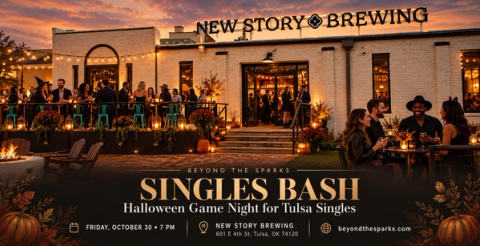
Next event · Singles Bash: Halloween Game Night for Tulsa Singles · Friday, October 30 · Tulsa · from $25.00 Reserve →
Start Your Free SPARK Quiz →