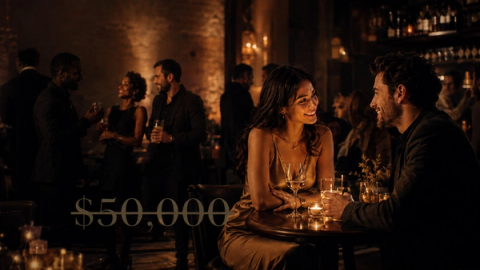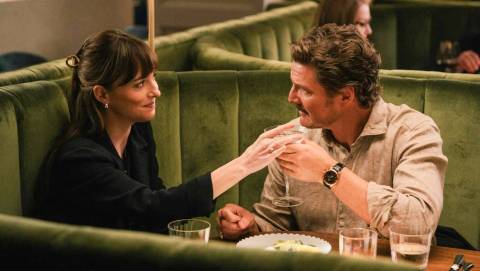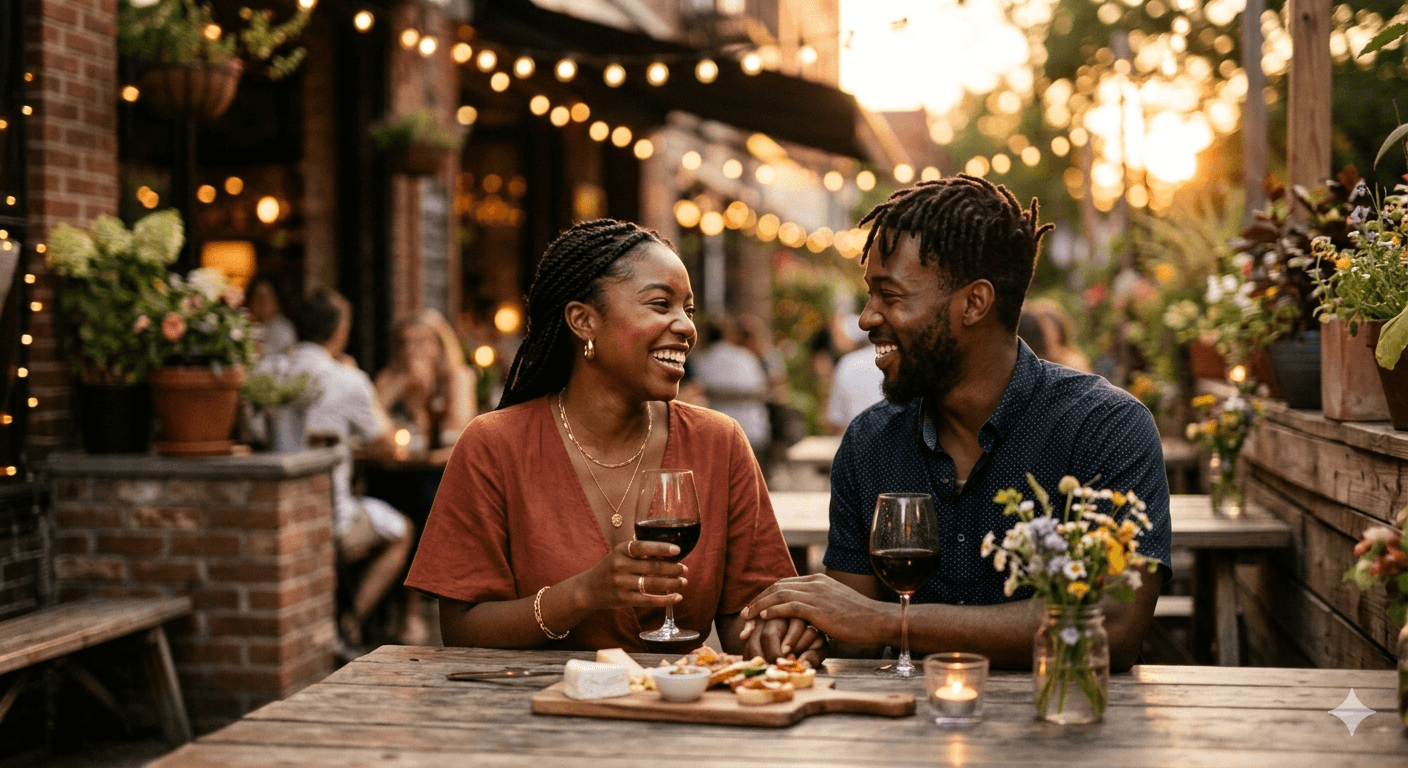

A friend of ours met somebody at Cabin Boys on a Thursday. They had one beer. She said she had to be up early, so he walked her out, and that was it. No second drink, no late-night text. They saw each other again the next week at the same brewpub because that is just what happens here.
That is slow dating. It is the opposite of swiping until your thumb cramps.
The trend has a name now, and the apps have been pushing it for two years. The catch is that it was packaged for New York and Los Angeles singles who are drowning in options. The pitch was that you should slow down, ask better questions, and meet fewer people on purpose [1].
We agree with the spirit of that pitch. But we think the apps got the geography wrong. Slow dating is a Tulsa idea, and an Oklahoma City idea, before it is anything else.
What the apps mean by slow dating
Here is the part that always gets buried. Bumble's own paying users dropped nearly 9 percent year over year in 2025, and revenue fell close to 8 percent in the same window [3]. The biggest dating app on the planet is shrinking, and the reason they keep printing in their own trend reports is that users are tired of the experience the apps were built around.
Slow dating is the umbrella term for going on fewer dates, asking deeper questions earlier, and looking for a real long-term match instead of a Saturday night [1]. Hinge has been hammering this for two years through its annual D.A.T.E. Report. The 2025 edition found that 84 percent of Gen Z daters want to build emotional intimacy faster, and that 85 percent of all daters are more likely to want a second date when the first one had thoughtful questions [1].
Bumble's 2025 trends report said something similar. Around 72 percent of Bumble users globally said they were looking for a long-term partner that year, and 66 percent of women said they were done settling [2]. The app even introduced a daily limit on free likes so that users would slow down [2].
Smaller apps went further. Thursday only opens one day a week so that singles cannot doomscroll the other six [2]. There are dating coaches now whose whole business is teaching you to text less.
The framing in all of this is that the modern single is drowning. Forbes Health found that 78 percent of dating app users feel burned out, and that women report it slightly worse than men [3]. Pew found that 88 percent of men and 90 percent of women who used apps in the past year said they often or sometimes felt disappointed by the people they met [3]. Almost everybody hates the experience and almost everybody keeps doing it.
So the apps say to slow down. Date with intention. Pick fewer matches. Ask better questions. Try to actually see the person across from you.
It is good advice. But the apps are not really set up to deliver it, and big cities are not really set up to support it. The framing assumes that the problem with modern dating is the user, when most of the problem is the venue. If you slow down inside a system designed for volume, the system simply hands the people you skipped to somebody else. Slow dating without context is just slower swiping.
Why slow dating breaks in big cities
In a city of eight million people, slowing down feels like leaving money on the table. There is always another match. There is always another bar three blocks away that you have never been to and never will return to. And the person you went out with on Tuesday lives in a different borough, works in a different industry, and has no friends in common with you.
That is the problem.
When the pool feels infinite, attention becomes the rare thing. You can match with somebody, chat for a week, and then quietly stop responding because the cost of disappearing is zero. They do not know your roommate. They do not work near your office. You will not see them at brunch. Researchers describe this as low relationship constraint, and it is one of the reasons early dating in a big anonymous city tends to fizzle before commitment can grow [4].
The apps know this. People are tired of putting effort into matches that vanish.
Slow dating in a big city asks you to be vulnerable in an environment that punishes vulnerability. That is a hard ask. And the bigger the city gets, the harder it gets.
Why Tulsa and OKC are built for it
Now picture the same date here.
You meet at Cabin Boys on a Wednesday. You finish one beer. You like each other but not enough yet to know what comes next. You walk out, and three days later you are at Mother Road Market grabbing lunch, and you see her again with two friends. One of those friends knows your sister. There is no escape from the encounter, and that is not a bug. That is the whole point.
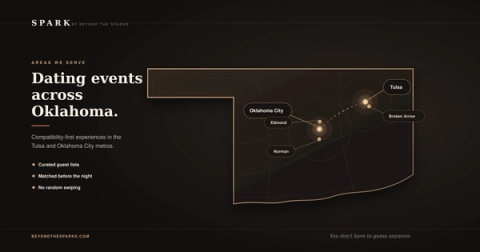
Tulsa metro counts about 400,000 people and OKC metro counts roughly 700,000, but in both cities the active singles scene runs through the same dozen neighborhoods. Pearl District. Cherry Street. Brady. Plaza. Midtown. Paseo. Bricktown. The social orbits stay tight. Singles in both cities run into each other at Guthrie Green concerts, at the Plaza District first Friday, at Scissortail Park on a weekend, at the same handful of breweries downtown. The geography is small enough that ghosting carries a cost. Your behavior follows you.
That is the missing piece in the national slow-dating conversation. Slow dating needs accountability to work, and accountability needs proximity. In a city where you might see the same person at the same coffee shop three Saturdays in a row, intention is not optional. It is the only thing that makes sense.
The repeat-venue thing matters more than people realize. When two people in Tulsa go on a second date at Cabin Boys, the bartender remembers them. When the third date happens at Bird and Bottle or Roosevelt's, somebody at the bar saw them on date two. The relationship gets witnessed. It gets context. Researchers studying dating couples have found that as social worlds become more interconnected, commitment and stability tend to grow with them [4].
OKC works the same way. Plaza District is small. Midtown is small. The Paseo is small. Automobile Alley is smaller still. You can run a whole month of dates inside a six-block radius and never repeat a venue, and yet you will keep seeing the same neighbors at Scissortail Park, at the Wheeler Ferris Wheel, at Stitch Cafe on a Sunday. That is the texture of dating here.
And this is exactly the condition Hinge has been trying to manufacture on purpose. Their data showed that 67 percent of Gen Z daters and 63 percent of millennials want to build romantic connections without leaning on alcohol over the next year, and that the appeal is slower pacing and clearer communication [1]. Those things grow naturally in a city where you can take a walk through the arts district after one beer and run into people who know your name.
Friends-of-friends do a lot of the heavy lifting too. When somebody in Tulsa asks who you are dating, three people in the room have already heard about it from someone else. It can feel claustrophobic to a transplant. But for the practice of slow dating, that information layer is gold. You cannot fake your way through three months because somebody will catch you.
There is a real psychological backbone here too. A 2023 study of more than 1,300 dating young adults found that attachment security actually grows with relationship duration, and that early-stage couples who get to spend real time together, with growing social overlap, see commitment and satisfaction increase along the way [4]. Translation. The slow part is not a vibe. It is the mechanism. The reason this works in Tulsa and OKC is that the cities feed the mechanism on autopilot.
Big cities have to invent slow dating. We just have to remember to use what is already here.
Four rules for dating slow here
We have run enough Beyond The Sparks events to see what works in practice. Here is the short version.
Pick one place and go back
The instinct in app dating is to never repeat a venue because it would mean past dates running into new ones. Drop that instinct. Pick a spot you actually love, like Cabin Boys, and use it for first dates. The staff starts to know you. The vibe gets predictable. And the date can focus on the person across the table instead of the menu.
Leave at the first natural stopping point
One drink is enough for a first date. If the conversation is good, you will want a second one anyway. Walking out at the natural break protects the energy and gives you both something to come back to.
Tell one mutual friend you are dating somebody
This sounds small. It is not. The moment a third person knows, the date is real. That person becomes the accountability layer that the city is already trying to give you. Take the help.
Wait a week before texting expectations
After the first date, send the "I had a good time" text within a day. Then wait. Resist the urge to define anything for at least a week of normal life. The slow dating idea works because it gives the two of you time to notice whether you actually miss each other [1].
How we built our events for this
Beyond The Sparks is what slow dating looks like when the city designs the date for you.
You take our [SPARK Quiz](https://beyondthesparks.com/spark-quiz) once. It takes about ten minutes. The quiz reads your personality, your communication style, and what you actually want in a partner. We use that to find one person we think you should meet. Not twenty. One.
Then you come to a [Beyond The Sparks event](https://beyondthesparks.com/events) at Cabin Boys, or one of our partner venues in OKC. You meet your match in person, on neutral ground, with no profile to scroll and no inbox to manage. The match is the date. There is no app sitting in your pocket asking you to keep swiping while you are sitting across from somebody.
And because it is Tulsa or OKC, the accountability is built in before you even arrive. The bartender will see you. Your mutual friends will hear about it. The next time you walk into the same room, the room will remember.
We do this because the data is loud and the experience is louder. People are tired of disappointment at scale [3]. They want to meet fewer people who are more right for them, in places where they will actually run into each other again. That is the whole product.
It also means you can read this article, decide slow dating sounds right, and not have to figure out the rest alone. We did the matching, the venue, the timing, and the accountability layer.
The best first date in Tulsa or OKC is the one where you finish your beer, say goodnight at a reasonable hour, and find yourself thinking about her on the drive home.
Sources
1. Hinge. "Hinge's New D.A.T.E. Report. How Gen Z Daters Can Close The Communication Gap in 2026." 2025. https://hinge.co/newsroom/2025-GenZ-Report 2. Bumble. "Global Dating Trends 2025." 2025. https://bumble.com/en-us/global-dating-trends/ 3. Forbes Health. "Dating App Burnout Survey 2023." https://www.forbes.com/health/dating/dating-app-burnout-survey/ 4. MDPI International Journal of Environmental Research and Public Health. "Romantic Duration, Relationship Quality, and Attachment Insecurity among Dating Couples." 2023. https://www.mdpi.com/1660-4601/20/1/856 5. Pew Research Center. "From Looking for Love to Swiping the Field, Online Dating in the US." 2023. https://www.pewresearch.org/internet/2023/02/02/from-looking-for-love-to-swiping-the-field-online-dating-in-the-united-states/
Ready to Find Your Match in Tulsa?
Take the free SPARK Quiz and join us at our next event. Everyone leaves with at least one match.
Next event · Dallas SINGLES MIXER (Slow Dating > Speed Dating) · Saturday, September 19 · 2965 S. Hwy 161, Grand Prairie, TX 75052 (Located in the EpicCentral entertainment district) · from $35.00 Reserve →
Start Your Free SPARK Quiz →