Dating apps are not failing because the technology is bad. They're failing because the problem they were built to solve isn't the actual problem.
The apps assumed that if you gave people enough options and enough filters, they'd find each other. And for first dates, they mostly delivered. But somewhere between the first match and a real relationship, most people got stuck in a loop: swiping, texting, meeting briefly, fading out, and starting over. The apps got better and the results got worse.
The Crisis Nobody at the App Companies Wants to Talk About
With plummeting subscriber numbers, rising costs, and users who are sick of endless swiping, the dating app industry is in crisis, and one of the most popular responses has been a return to in-person activities like speed dating. [1]
Bumble laid off a significant portion of its staff in 2024. Match Group has faced years of declining revenue from its flagship Tinder product. The companies have responded by doubling down on AI features, premium tiers, and redesigned interfaces. None of it has reversed the core problem, which is that people aren't leaving because the apps are hard to use. They're leaving because the apps don't work. [1]
Only 23% of Gen Z adults in the U.S. report meeting their current partner through a dating app, social media, or online community, which suggests the generation that grew up with these tools is already skeptical of them. [1]
The Return of In-Person Dating
2025 saw a 60% rise in speed dating events as people ditched apps for in-person singles events. [2] The majority of attendees are busy, professional-level people who value their time. [2] This isn't a fringe movement. Eventbrite reported a 63% surge in speed dating events compared to 2022, driven by what the platform's resident dating expert described as mass dating app fatigue. [3]
In Columbus alone, attendance at in-person singles events jumped 189% between 2023 and 2024. [3] Cities across the country are seeing similar patterns. The demand was always there. The events just weren't.
The shift makes sense. In-person events solve a specific problem that apps never could: presence. You know within the first two minutes whether you're interested in talking to someone. No amount of profile optimization or AI-curated match scoring replicates that. Eye contact, first impressions, real-time conversation: these things matter more than a filtered selfie, and people are remembering that. [3][6]
Where the Venture Money Is Going Instead
Dating apps received $6.18 billion in AI-related venture funding in 2025, and most of it went into building tools like voice-based interviews, AI conversation coaches, and algorithms that analyze your texting patterns to find compatible people. [5] Some of it is genuinely interesting.
But none of it solves the fundamental gap, which is that people want to feel something in the moment, with someone in front of them, not through a screen. You can build a better algorithm for predicting initial attraction. You cannot build an algorithm that replaces the feeling of sitting across from someone and realizing you don't want the conversation to end.
The startups getting funded in this space know this, which is why the most interesting ones, like Known, are explicitly designed to get people off the app and into a room together faster. [5] The technology is becoming a bridge to in-person connection rather than a substitute for it.
What the New Events Actually Look Like
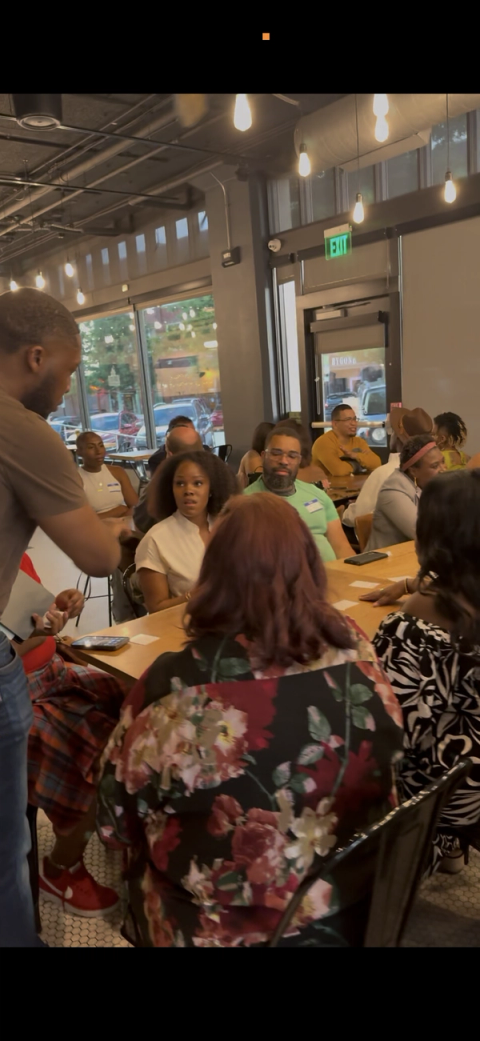
The events coming back aren't the awkward speed-dating setups from twenty years ago. Today's structured singles events are built around shared context, themed formats, and compatibility-first design, because organizers have learned that a successful event requires more than a DJ and drink specials. [4][6]
Interest-based events, dog lovers, bookstore nights, industry mixers, have taken off because shared context gives people something real to talk about from the first minute. The small talk problem that kills generic mixers disappears when everyone in the room already has something in common. [4]
That's the whole idea behind the SPARK Profile. Before you walk into an event, you know something real about yourself: your compatibility type, your patterns, your strengths in a relationship. That's not a gimmick. It's the thing the apps were always trying to build and never quite got right.
Sources
- Phys.org. "Why In-Person Dating Is Making a Comeback and Why Gen Z Is Struggling With It." July 21, 2025. https://phys.org/news/2025-07-person-dating-comeback-gen-struggling.html
- Pre-Dating Speed Dating. "Frequently Asked Questions About Speed Dating." 2025. https://www.pre-dating.com/speed-dating-faqs.html
- PureWow. "Speed Dating Is Making a Comeback in 2024." April 4, 2024. https://www.purewow.com/wellness/speed-dating-comeback
- Koval, Katya. "Dating App Fatigue Is Real, In-Person Events on the Rise." Medium, February 10, 2026. https://katya-koval.medium.com/dating-app-fatigue-is-real-in-person-events-on-the-rise-ace1e812fa20
- AInvest. "The AI Revolution in Dating: Disruption and Scalability in the Digital Love Economy." December 19, 2025. https://www.ainvest.com/news/ai-revolution-dating-disruption-scalability-digital-love-economy-2512/
- Milwaukee Dating and Social Vision. "The Surprising Resurgence of Speed Dating in America." December 5, 2025. https://milwaukeedatingandsocialvision.com/the-resurgence-of-speed-dating/
Frequently Asked Questions
Ready to Find Your Match in Tulsa?
Take the free SPARK Quiz and join us at our next event. Everyone leaves with at least one match.
Next event · Dallas SINGLES MIXER (Slow Dating > Speed Dating) · Saturday, September 19 · 2965 S. Hwy 161, Grand Prairie, TX 75052 (Located in the EpicCentral entertainment district) · from $35.00 Reserve →
Start Your Free SPARK Quiz →