You are standing on the sidewalk outside Cabin Boys Brewpub, ten minutes before an event you signed up for alone, and your thumb is hovering over the app to cancel. Nobody is coming with you. You do not know a single name on the guest list. Every instinct is telling you this is the kind of thing you do with a friend, not by yourself, and going in solo suddenly feels less like confidence and more like a mistake you are about to make in public.
That exact moment, thumb over the cancel button, is the single biggest reason people who would genuinely enjoy one of our events never actually walk through the door. So let's talk through what actually happens if you go alone, because the honest answer is that almost everyone does, and the format was built assuming you would.
The one thing everyone worries about before their first event
It is never the event itself people are afraid of. It is the specific ten minutes before it starts, walking in without a familiar face, standing somewhere that is not quite a bar and not quite a party, and not knowing what to do with your hands while you figure out where to go. That fear is not really about the event. It is about being watched and judged while you figure it out.
Here is the part almost nobody tells you: that fear is measurably larger in your head than it is in reality. Researchers Thomas Gilovich, Victoria Medvec, and Kenneth Savitsky ran a now-famous study where participants wore an embarrassing t-shirt into a room of strangers and then guessed how many people had noticed it. Participants consistently overestimated how many people had actually clocked what they were wearing, a pattern the researchers named the spotlight effect [1]. Everyone assumes they are the main character other people are watching and judging. Almost nobody actually is, because everyone else in the room is having the exact same thought about themselves.
The study is specific enough to be worth knowing in detail. Researchers had a college student put on a t-shirt featuring a large image of Barry Manilow, chosen specifically because participants rated it embarrassing to wear, then sent that student into a room of other students and asked them afterward to guess how many people in the room had noticed and could identify the shirt. The students wearing the shirt guessed nearly twice as many people had noticed as actually had. Nobody in that room was thinking about the shirt nearly as much as the person wearing it assumed.
Why almost nobody actually brings a friend
The format is not built around arriving in pairs. The SPARK Quiz you take beforehand is individual, your matches are individual, and the conversation rounds pair you with people based on your answers, not on who happened to walk in next to you. Bringing a friend does not actually change any of that. You would still be doing the quiz separately, sitting through separate matched conversations, and comparing notes afterward instead of experiencing the night together the way you would at a normal party.
Once you see it that way, going alone stops being the risky version of the plan and starts looking like the default one. A friend at your side does not remove the ten minutes of standing around before the structured part starts. It just means you are having that awkward stretch with someone you already know, which can feel like a security blanket, but it also means you are less likely to actually talk to anyone new in that window, which defeats the entire point of showing up.
You are not as alone as it feels, statistically
The instinct that going somewhere alone is unusual or slightly embarrassing has gotten a lot less accurate in the last few years. The U.S. Surgeon General's 2023 advisory on loneliness found that even before the pandemic, roughly half of U.S. adults reported experiencing measurable levels of loneliness, and the report treats a lack of social connection as a genuine public health risk, comparable in mortality impact to smoking up to fifteen cigarettes a day, and associated with a 29 percent increased risk of heart disease and a 32 percent increased risk of stroke [2]. Showing up alone to something structured enough to actually produce a conversation is not the anomaly anymore. Staying home because going alone feels awkward is a much bigger part of the actual problem.
Everyone in that room assumes they are the one being watched. Almost nobody actually is.
What actually happens in the first five minutes
You check in at the door, and staff hand you a card with the names of the people we have already matched you with for the night, typically three to five, based entirely on your SPARK Quiz results. That card is doing a lot of work you do not have to do yourself. You are not walking into a room and hoping to find someone to talk to. You already have a short, specific list of people the data says are worth meeting, and the structure tells you exactly when and where you will meet each one.
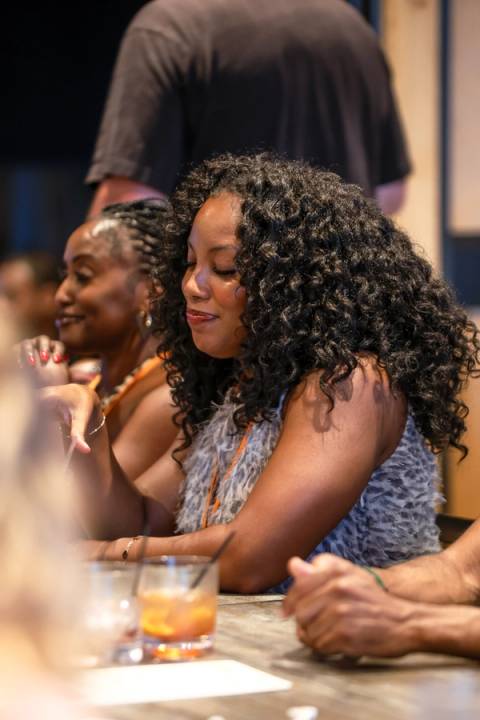
Cabin Boys Brewpub itself helps here too. It is a working brewpub in the Tulsa Arts District, not a rented banquet hall or a sterile event space, which means there is an actual bar, actual regulars, and an actual reason to be standing where you are standing even in the ninety seconds before your first round starts. You are not conspicuously waiting in an empty room. You are in a bar, on a Friday night, which is a completely normal thing to be doing alone.
There is no cold-open mingling period where you have to invent small talk with strangers to fill time. The rounds start on a schedule, roughly ten minutes each, and every single one comes with a built-in reason to be talking to that specific person: you both showed up, you both took the same quiz, and something in your answers matched. That shared context does most of the conversational lifting a normal room of strangers would leave entirely up to you.
The structure does the socializing for you
This is the part that actually solves the alone problem, not just distracts from it. A normal party or bar puts the entire burden of starting a conversation on you, figure out who to approach, invent an opener, read whether they want to keep talking. Our format removes almost every one of those decisions. You are told who to talk to, when, and you already know the one thing you have in common before you sit down, because the quiz already found it.
That is a fundamentally different kind of alone than showing up to a bar by yourself and hoping someone talks to you. Nobody at a Beyond The Sparks event is standing in a corner scanning the room for an opening. Everyone has a card, everyone has a schedule, and everyone is in exactly the same position you are, whether they walked in with a friend or not.
What happens if you do not click with a match
Not every one of your three to five matches is going to feel like a spark, and that is expected, not a sign the process failed. The rounds are short on purpose, roughly ten minutes, so a conversation that is not clicking is never a trapped, awkward hour. It ends, and the next round starts with someone new, no explanation needed to anyone.
This is another place going alone actually works in your favor. If you came with a friend and a round is not landing, there is a temptable urge to catch their eye across the room or debrief immediately after. Going solo means you stay present in your own conversations instead of narrating the night to someone else in real time, which tends to make you a better, more attentive conversational partner to the person actually in front of you.
It is worth naming the specific fear underneath all of this directly, because vague anxiety is harder to talk yourself out of than a specific one. The fear is usually not really about being alone. It is a fear that a round will not go well and everyone else nearby will somehow notice. The spotlight effect research applies here just as directly as it does to walking in the door: the person across from you in a flat conversation is thinking about their own performance, not narrating yours to the room.
Three small things that make going alone easier
Take the SPARK Quiz a day or two ahead rather than the morning of. It takes five minutes, but rushing through it right before you walk in tends to produce a thinner, less specific set of answers, and the quality of your matches depends on how honestly and specifically you answered. Give yourself the five minutes when you are not also trying to find parking.
Arrive on time rather than early. The ten minutes before a structured event starts are the least structured part of the whole night, and there is no upside to spending more of them standing around alone than you have to. Showing up close to the actual start time means you walk straight into the part of the evening that has a built-in plan.
Treat the first round as a warm-up, not a test. Your first conversation of the night does not have to be your best one. Rounds are short and there are several of them, so give yourself permission to be a little rusty on the first one instead of putting the whole night's pressure on it.
The morning after: how you will actually know if it worked
None of this means every round will feel effortless, and it should not have to. A quiet or awkward ten minutes with one match does not undo a good connection in the next round, and it is not a signal to leave early. The structure is built to give you several tries in one night specifically because not every match is going to land, and that is normal, not a verdict on how the evening is going.
Every guest leaves with at least one match, most leave with two or three, and it is not left to guesswork or a vague feeling about how the night went. Matches are based on mutual interest expressed the same night, and you get an email by the next morning with who matched back, a name attached, not a maybe.
That confirmation email is doing something a normal solo night out never does. A regular bar night ends with an ambiguous read on how it went, hoping an interaction meant something, wondering if you should have gotten a number. Ours ends with a direct answer sitting in your inbox before you have even had coffee. You do not have to guess whether going alone worked. You will know by morning.
So, should you actually go by yourself
Yes, and the honest answer is that the format works better that way, not just as well. You are not more exposed going alone, the spotlight effect research says the room is paying far less attention to you than it feels like [1]. You are not missing out on some group-bonding version of the night, because the structure was built around individual matching from the start. And you are not gambling on an ambiguous outcome, because the morning-after email tells you exactly what happened.
Take the SPARK Quiz at beyondthesparks.com before your first event. Five minutes, and it is the thing standing between that sidewalk moment and an actual card with actual names on it.
We will see you at Cabin Boys. Come alone. Almost everyone does.
Sources
1. Gilovich, T., Medvec, V. H., and Savitsky, K. (2000). The Spotlight Effect in Social Judgment: An Egocentric Bias in Estimates of the Salience of One's Own Actions and Appearance. Journal of Personality and Social Psychology, 78(2), 211-222. https://doi.org/10.1037/0022-3514.78.2.211
2. U.S. Surgeon General's Advisory, "Our Epidemic of Loneliness and Isolation," 2023. https://www.hhs.gov/sites/default/files/surgeon-general-social-connection-advisory.pdf
3. Beyond The Sparks, "What Happens at a Beyond The Sparks Event." https://beyondthesparks.com/blog/what-happens-at-beyond-the-sparks-event
Frequently Asked Questions
Yes. The format is built around individual SPARK Quiz matching, not group attendance, so going solo is the default way most guests experience the night, not an exception.
You are not expected to. Check-in gives you a card with the names of the people you are already matched with based on your quiz results, so you always know who to talk to next and roughly when.
Matches are based on mutual interest expressed the same night, and you receive an email by the next morning naming who matched back. Every guest leaves with at least one match, most leave with two or three.
Research on the spotlight effect shows people consistently overestimate how much others notice or judge them in social settings. Combined with a structured format where you are told who to talk to and when, most of the awkwardness people anticipate does not match what actually happens.
Ready to Find Your Match in Tulsa?
Take the free SPARK Quiz and join us at our next event. Everyone leaves with at least one match.
Start Your Free SPARK Quiz →