
Not long ago, admitting you used a dating service was quietly embarrassing. You didn't bring it up at dinner. You definitely didn't tell your parents. Meeting someone through Match.com carried the unspoken implication that you had run out of better options.
That stigma is gone. And what replaced it is something nobody saw coming: a booming, multi-billion dollar industry where the most in-demand services charge more than a luxury car and still have a waitlist.
How Dating Apps Created the Problem They Were Supposed to Solve
Lockdowns pushed millions of people who would have never looked twice at a dating app into signing up for one. Swiping became normal. Meeting strangers online stopped being something you had to explain away. For a while, it worked. But the longer people stayed on these platforms, the more the cracks showed.
The apps made it easy to connect with someone and equally easy to move on to the next profile. There's always another option two swipes away, and that feeling quietly destroys the ability to commit to anyone in front of you. The abundance that felt like a feature turned out to be the bug.
User fatigue, disappointment, and large-scale abandonment of online services followed, and in their wake, face-to-face personal matchmaking surged back into demand. [1]
The Industry That Quietly Kept Growing
The U.S. matchmaking industry now includes over 2,000 professional firms of varying sizes, skill sets, and pricing models and that's before you count the friends, parents, and coworkers who have made it their personal mission to set you up. [1]
At the lower end, you have large corporate chains doing volume business with standardized packages. At the high end, you have boutique firms charging numbers that look like a typo. The highest-end players in this space are perfectly comfortable charging between $50,000 and $250,000 for their services with no strings and no guarantees attached, and they are growing their revenue every year. [2]
The premium matchmaking market alone surpassed $1.2 billion in 2024 and is projected to nearly triple by 2033. [2] This is not a niche. It is a serious industry responding to a serious problem.
Who Is Actually Paying These Prices
Who's paying these prices? The specific targets are tech-created millionaires with huge amounts of money, no time, no social experience, and no idea how to find a partner. [1] AI IPOs and crypto deals have created a wave of newly rich people who are, by most accounts, completely unprepared for dating. And since they're used to paying for solutions to hard problems, they pay.
But it's not just the ultra-wealthy. The broader shift toward paid matchmaking services is happening across income levels, driven by the same frustration: people are tired of systems that generate activity without generating results. A subscription to a dating app feels affordable until you add up three years of monthly fees and realize you have nothing to show for it.
What People Actually Want Underneath All of This
There's something revealing in all of this. It's not really about the matchmakers. It's about what people want underneath the whole thing: someone who actually knows them, who filters on their behalf, who removes the noise. That's what the apps promised and never quite delivered. [3]
When you hire a matchmaker at any price point, you're not really buying introductions. You're buying the decision to stop sorting through an infinite pool of strangers on your own. That decision, it turns out, is worth a lot to people who can afford it.
The psychology makes sense. The relief isn't just practical. It's emotional. Being seen and selected by a real person, even a professional one, feels meaningfully different from matching with someone who swiped right on your photo.
You Don't Need a Six-Figure Retainer to Get This
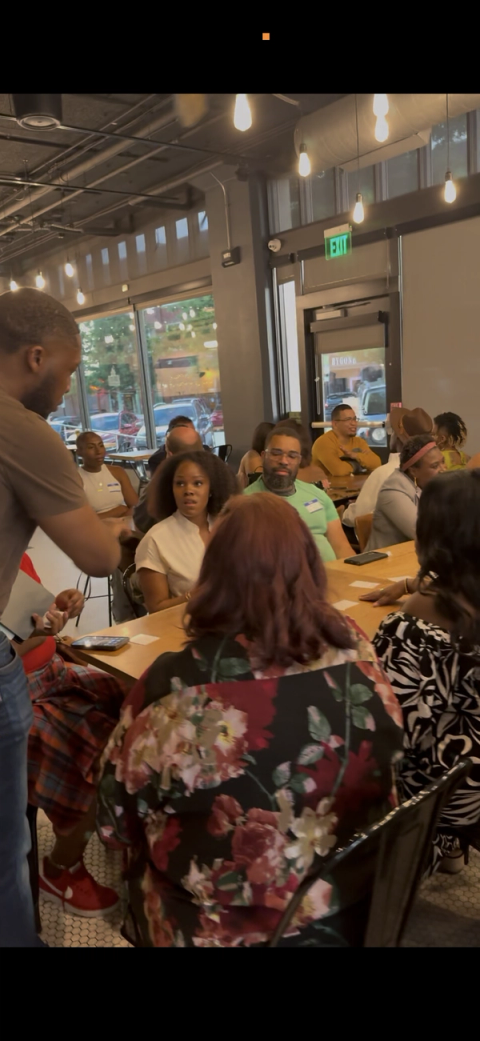
The good news is you don't need a $250,000 retainer to get that experience. Compatibility-first events where the sorting is done before you walk through the door give you the same core thing at a fraction of the cost and with actual humans in the room. [4]
The expensive services aren't succeeding because of their price tags. They're succeeding because they've figured out that intention, vetting, and structure are what was missing from modern dating all along. That's a lesson anyone can apply without spending six figures to learn it.
Sources
- Tullman, Howard. "Online Dating, US Matchmaking Industry, AI, Millionaires." Inc., 2025. https://www.inc.com/howard-tullman/online-dating-us-matchmaking-industry-ai-millionaires/91379688
- HTF Market Intelligence. "Global Premium Matchmaking Service Market." 2025. https://www.htfmarketintelligence.com/report/global-premium-matchmaking-service-market
- IBISWorld. "Dating Services in the US Industry Analysis." 2025. https://www.ibisworld.com/united-states/industry/dating-services/1723/
- Verified Market Reports. "Matchmaking Service Market Size, Insights, Growth and Forecast 2033." 2025. https://www.verifiedmarketreports.com/product/matchmaking-service-market/
Frequently Asked Questions
Ready to Find Your Match in Tulsa?
Take the free SPARK Quiz and join us at our next event. Everyone leaves with at least one match.
Next event · Dallas SINGLES MIXER (Slow Dating > Speed Dating) · Saturday, September 19 · 2965 S. Hwy 161, Grand Prairie, TX 75052 (Located in the EpicCentral entertainment district) · from $35.00 Reserve →
Start Your Free SPARK Quiz →