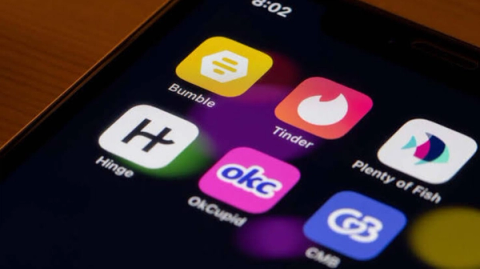

The oldest complaint about online dating used to be that people exaggerated their height or used a ten-year-old photo. In a 2013 Pew Research Center survey, 54 percent of online daters said they had felt someone else seriously misrepresented themselves in a profile [1]. That is a historical finding about respondents' experiences, not a current estimate of how many profiles are false. It still captures a familiar problem: you have to decide what to trust before meeting.
Now polished messages and profile images can also be AI-assisted. The FBI warned in December 2024 that criminals use generative AI to create believable profiles and messages, including for romance fraud [2]. Using AI to edit a bio isn't automatically deception. The concern is hidden impersonation: not knowing whose words or images you're responding to.
The question isn't only whether someone exaggerated a job title. It can also be whether you're talking to the person you think you are.
Why This Is Actually a Bigger Problem Than It Sounds
Misrepresentation isn't new, and it was never limited to flattering photos. A person can misstate their circumstances, and an account can impersonate someone entirely. AI adds another way to make a false impression convincing; it doesn't mean every polished profile is a fake.
A photo can be enhanced or generated. An early message can be drafted by software rather than in the sender's own voice. That doesn't tell you how common any particular practice is, but it does make an understandable question more pressing: what will this person actually be like when we're talking face to face?
The Response: Vetting Before Meeting
Wanting more context before investing time is reasonable. A video call, checking a profile and meeting in public can each contribute something, but none is a complete verification process. Here, vetting means learning more about compatibility and seeing how a conversation feels, not certifying someone's identity or background.
A gut feeling is a starting point, not a promise. Keep asking questions and pay attention to what you can actually observe.
What Compatibility Vetting Can Actually Tell You
Compatibility vetting isn't the same thing as a background check. A self-reported quiz can offer a reason to introduce two people. Meeting them gives you a chance to hear their own voice, notice how they listen and decide whether you want another conversation. Neither step establishes that everything someone says is true.
That's the advantage we're aiming for at a Beyond The Sparks night. Before attending, guests take the free SPARK Quiz, covering Connection Pace, Lifestyle Rhythm, Emotional Processing and Togetherness Style. Answers help prepare compatibility-matched introductions, and attendance and check-in establish who is there to meet. Your first conversation happens with the person in front of you. The quiz is based on self-reported answers; it is not a background check, an identity certification or a promise against deception.
Why This Matters More Now Than It Used To
The familiar advice still matters: take your time, meet in public and don't send money because someone you met online tells a convincing story. The FBI also recommends researching a person's photo and profile and watching for pressure to move off a dating service [3]. An in-person event is an additional way to meet, not a reason to set ordinary caution aside.
If text-only interaction is making you feel stuck, you can choose a format that gets you into a real conversation sooner. You can learn something from that exchange without treating physical presence as proof of identity, intentions or safety.
The answer doesn't have to be endless suspicion. It can be choosing a format that lets you learn more directly, while keeping the same boundaries you would use with anyone new. A good introduction opens a conversation. It doesn't make the decisions after it for you.
Take the free SPARK Quiz to learn about your profile, then check the event calendar for an in-person night. If your next date is not listed, choose your market for event emails and confirm your address. Quiz completion and email signup are not event reservations.
Sources
1. Pew Research Center (October 21, 2013). Online Dating & Relationships. Historical survey finding about respondents experiencing profile misrepresentation.
2. FBI/IC3 (December 3, 2024). Criminals Use Generative Artificial Intelligence to Facilitate Financial Fraud.
3. FBI. Romance Scams. Practical precautions; checked November 8, 2026.
Illustrative stock photo: Lina Bob / Unsplash.
Frequently Asked Questions
No. The quiz uses self-reported answers to help prepare compatibility-matched introductions. It does not certify identity, verify someone's history or promise safety.
No. Editing a bio with AI and impersonating someone are different things. The issue is whether a profile or conversation gives a misleading impression of who is involved. Meeting in person can add context, but it does not prove every claim is true.
Take your time, meet in a public setting and keep your usual boundaries. Don't send money or share sensitive information because of a convincing story. An event introduction is a chance to talk, not a substitute for your own judgment.
Ready to Find Your Match?
Take the free SPARK Quiz and join us at our next event. Every checked-in guest leaves with at least one match.
Next event · OKC Singles Bash 3.0 Dec 4: Game Night · Friday, December 4 · Oklahoma City · from $39.00 Reserve →
Start Your Free SPARK Quiz →