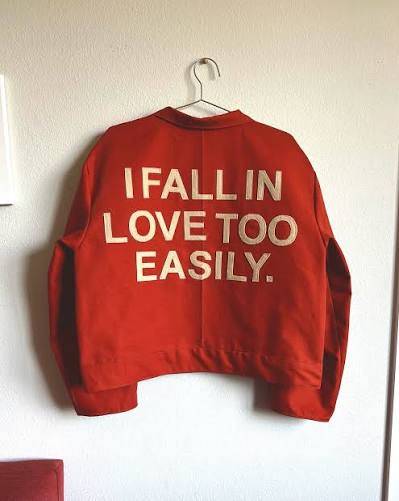

It started as a text at 11 p.m. on a Friday. No labels, you both agreed, just two people who like each other's company and do not want the whole relationship apparatus that comes with saying it out loud. Six months later one of you is checking the other's location and the other one genuinely does not understand why that is a problem, because nothing ever changed. Nothing was supposed to change.
Every friends-with-benefits advice column has the same fix for this. Set clear rules. Communicate up front. Talk about what happens if feelings show up. It is good advice in the sense that it sounds responsible. It is not, according to the actual research, the thing that determines whether the arrangement works.
The popular advice is "just communicate." The data says that is not what decides it.
Jesse Owen and Frank Fincham ran one of the more detailed longitudinal studies on friends-with-benefits relationships among young adults, tracking real couples over time rather than asking people to guess in hindsight [1]. One of their more surprising findings is the one almost nobody quotes. Communication quality and how clearly the rules were defined up front were not significantly associated with how the relationship actually turned out [1].
That is not what the advice columns say, and it is worth sitting with, because it means the entire genre of "here is how to set the right ground rules" content is giving people a sense of control that the data does not actually support. You can have the most explicit conversation imaginable about what this is and is not, and it will not reliably protect you from where it goes.
It is worth pausing on why that gap between advice and evidence exists at all. Rules-based advice is easy to give, easy to follow, and makes both the writer and the reader feel like something concrete was accomplished. Telling someone their outcome depends on an internal alignment they cannot fully verify in advance is a much less satisfying thing to write, and a much less actionable-feeling thing to read, even when it is closer to true.
You can negotiate the terms as carefully as you want. The terms were never what determined the outcome.
What actually happened in the real study
Owen and Fincham followed young adults through friends-with-benefits relationships and found that roughly 22 percent developed real emotional complications along the way, unrequited feelings, jealousy, a quiet hope that the other person would eventually want more, at close to the same rate for men and women [1]. That is not a small minority. That is roughly one in five arrangements that started as strictly physical ending up somewhere far more complicated than either person planned for.
There is a second finding worth knowing if you are hoping this eventually turns into something real. Young adults whose exclusive relationship started as a friends-with-benefits arrangement reported lower relationship satisfaction than couples who started dating without that phase first [1]. The casual start does not appear to be a neutral warm-up. It seems to leave a residue that shows up even after both people agree to make it official.
A broader 2026 meta-analysis in the Archives of Sexual Behavior looked across many of these studies at once and found friends-with-benefits status carries a weak but real association with both clinical and non-clinical mental health measures, and that men report more purely sexual framing of the arrangement than women do on average [2]. That gender gap in framing is not a minor detail. It means the two people in the exact same arrangement are frequently not actually in the same arrangement psychologically, no matter how clearly they think they defined it.
The gap nobody accounts for
The 2026 meta-analysis found something that deserves more attention than it gets. Men report significantly more purely sexual framing of friends-with-benefits arrangements than women do, on average, across the studies analyzed [2]. That does not mean every man is casual and every woman is not. It means that in a meaningful share of these arrangements, the two people are working from different internal definitions of the same word, benefits, while both believing they agree.
That gap rarely gets surfaced in the initial conversation, because both people are usually describing the arrangement the same way out loud. Casual. No pressure. Just fun. The mismatch is not in the language. It is in what each person privately expects that language to protect them from, and language cannot fix a gap neither person can see yet.
The biology working against the agreement
Here is the part that explains why communication cannot fully solve this. Physical intimacy triggers a release of oxytocin and vasopressin, the same bonding hormones involved in early-stage romantic attachment, regardless of what either person has verbally agreed to going in [3]. We have written before about the fMRI research showing new romantic love lighting up dopamine-driven reward circuitry almost automatically once a specific person becomes the object of attention. The body does not check the terms of the arrangement before it starts running its own program.
That mismatch, an agreement that says casual and a nervous system that does not fully care what the agreement says, is the actual mechanism behind the 22 percent emotional-complication rate. It is not that those people communicated badly. It is that the arrangement asks the brain to keep something compartmentalized that it is not reliably built to keep compartmentalized, especially for whichever partner has a more anxious attachment style to begin with.
The agreement lives in your calendar. The bonding response lives somewhere your calendar cannot reach.
The one condition that actually predicts whether it works
If explicit rules are not the deciding factor, what is. The honest answer from the research is less satisfying than a checklist, but it is real. The arrangements that stay stable are the ones where both people's actual desired outcome was already the same from the start, not the ones where both people said the same thing out loud.
That reframing matters because it changes what you are actually supposed to evaluate before entering one of these arrangements. Not "have we talked enough about this," which the data says will not save you, but "do I actually know, honestly, what I want from this six months from now, and does it match what they want." That is a much harder question to answer truthfully, which is exactly why most people skip it in favor of the easier, more comfortable rules conversation instead.
That is a subtle but important difference. Two people can recite an identical script, this is casual, no expectations, and still be running different internal hopes underneath it. The 22 percent who developed complications were not, by and large, people who forgot to have the talk. They were people whose actual wants diverged from what they had agreed to say, sometimes without fully admitting it to themselves until months in [1]. The condition that predicts a stable outcome is alignment of the real, felt goal, not alignment of the stated terms.
The rules were never the risk. The gap between what you agreed to say and what you actually wanted was.
Why that is harder to control than it sounds
This is uncomfortable precisely because it means the standard advice, talk about it up front, cannot fully protect you. You can only accurately report what you want if you already know what you want, and feelings that develop over months of physical closeness are not always visible to the person having them until they are already there. Asking someone to accurately forecast their own emotional trajectory before it happens is asking more of self-knowledge than most people, of any age, reliably have.
That does not make the conversation pointless. It just means the conversation is a floor, not a guarantee. It filters out the small number of people who are being actively dishonest about their intentions. It does nothing for the much larger group of people who are being honest and still wrong about how they will feel in month four.
This plays out in an almost identical script across the arrangements that go sideways. Month one, both people genuinely mean it when they say no expectations. Month three, one of them notices they check their phone differently when the other person's name shows up, and talks themselves out of what that might mean because admitting it would break an agreement they still want to believe in. Month five, the imbalance is obvious to everyone except possibly the two people living it, because they have spent three months rationalizing a feeling neither one signed up to have.
What this means if you are already in one, or considering it
We wrote separately about the situationship problem specific to Tulsa and OKC, the ambiguous, undefined middle ground a lot of daters get stuck in here because the local pool is small enough that ending things cleanly feels riskier than staying in something undefined. Friends-with-benefits arrangements are a more explicit cousin of that same trap, agreed-upon instead of ambiguous, but carrying a similar risk that the arrangement outlasts its usefulness because ending it feels like a bigger deal in a metro where you might see the person again next month.
None of this is an argument that friends-with-benefits arrangements always end badly. Most of them, by the numbers, do not develop the complications above. It is an argument for being honest about the real risk instead of the comfortable version of the risk. The comfortable version says a good conversation protects you. The real version says roughly a fifth of the time, it will not, and no amount of clarity in the initial agreement reliably predicts which fifth you will land in.
If you are in one now, the more useful question is not whether you set clear enough rules. It is whether you can feel, honestly, whether your actual wants have started drifting from what you agreed to. That check-in, with yourself first and then with the other person, matters more than a rules conversation that already happened and cannot be renegotiated after the fact just by being cited.
A useful, honest check is simpler than a rules conversation. Notice whether you have started narrating the relationship differently to yourself, even in small ways, checking their social media more, feeling a flicker of something when they mention seeing someone else, hoping a plan turns into more time than either of you actually has. None of those feelings are a betrayal of the agreement. They are data about where you actually are, which the agreement itself was never able to track.
Why we built around this problem instead of hoping around it
This is exactly the trap the SPARK Quiz is built to route around. One of the five dimensions we match on is relationship vision, where you actually want things to go, on what timeline, with what structure, not just a mood or a stated preference in the moment [4]. We do not ask whether you are looking for something casual or something serious and take your word as the whole picture. We look for people whose felt trajectory already lines up with yours, which is the exact variable the Owen and Fincham research says actually predicts outcomes, not the exact variable most dating advice focuses on.
That is also why our events skip the casual-arrangement phase entirely. Every guest at Cabin Boys Brewpub in the Tulsa Arts District has already been matched on whether they are looking for the same kind of thing you are, before either of you says a word about labels or rules. You are not negotiating terms with a stranger and hoping your real wants stay aligned with what you agreed to say. You are meeting someone whose actual trajectory has already been checked against yours.
Take the SPARK Quiz at beyondthesparks.com. Five minutes, and it asks the question a friends-with-benefits conversation usually cannot answer honestly, which direction you are actually headed.
We will see you at Cabin Boys, no ambiguous arrangement required to get there.
Sources
1. Owen, J., and Fincham, F. D. (2012). "Friends with benefits relationships as a start to exclusive romantic relationships." Journal of Social and Personal Relationships. https://fincham.info/papers/2012-jspr-fwb-owen.pdf
2. "A Meta-Analysis of Friends with Benefits Relationships: Examining Sexual Features, Sexual and Mental Health, Violence/Aggression, and Gender," Archives of Sexual Behavior, 2026. https://link.springer.com/article/10.1007/s10508-026-03426-0
3. Neurolaunch, "Friends with Benefits: Psychological Effects and Dynamics" (oxytocin and vasopressin bonding response). https://neurolaunch.com/psychological-effects-of-friends-with-benefits/
4. Beyond The Sparks, "How the SPARK Profile Predicts Real Chemistry." https://beyondthesparks.com/blog/how-spark-profile-predicts-chemistry
Frequently Asked Questions
Ready to Find Your Match in Tulsa?
Take the free SPARK Quiz and join us at our next event. Everyone leaves with at least one match.
Next event · Dallas SINGLES MIXER (Slow Dating > Speed Dating) · Saturday, September 19 · 2965 S. Hwy 161, Grand Prairie, TX 75052 (Located in the EpicCentral entertainment district) · from $35.00 Reserve →
Start Your Free SPARK Quiz →