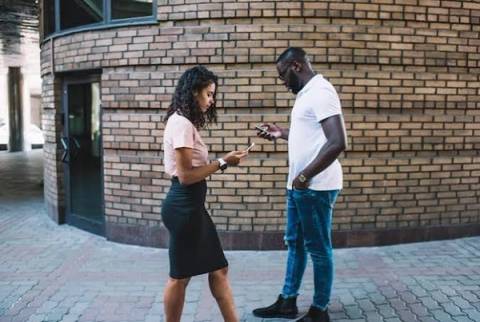

Six weeks of texting every day. Two dates that felt like real dates. No label, no conversation about what this actually is, and no clear idea whether asking would end it or finally start it. You've described this to a friend at least once this year without needing to explain what a situationship is. Everyone already knows.
The common read on situationships is that they're just a generational preference, younger daters being more relaxed about labels, less interested in rushing into something official. The data tells a less comfortable story. Situationships aren't a preference most people chose. They're a symptom of a dating environment that's gotten harder to navigate, and a lot of the people in them wish they weren't.
The actual numbers behind situationships
A January 2024 YouGov survey found 39 percent of U.S. adults have been in a situationship at some point, rising to 50 percent among adults 18 to 34 [1]. That's not a fringe experience. That's roughly one in two young adults describing a relationship they couldn't confidently name.
It's part of a bigger slowdown, not a separate trend
Situationships don't exist in isolation. The Institute for Family Studies' 2026 State of Our Unions report, surveying 5,275 adults, found only 31 percent of 22 to 35 year olds go on dates monthly or more often [2]. Read that the other way: nearly seven in ten people in that age range are dating less than once a month. A rise in undefined, low-commitment situationships and a broader decline in actual dating frequency are two sides of the same coin, less structured effort going into dating overall, and more ambiguity filling the gap that structure used to occupy.
Dallas's version of the same problem
Dallas isn't exempt from this, and local coverage suggests it may be compounding it. The Dallas Observer published a piece arguing Dallas's dating culture is getting worse specifically as the city's political divide grows, describing a dating scene where political alignment increasingly becomes a filter before two people even get to the question of actual compatibility [3]. That's a new layer of friction stacked on top of everything else already making dating harder nationally, one more thing to guess about before either person is willing to define anything.
A situationship isn't a lack of commitment. It's usually a lack of information neither person wanted to be the one to ask for.
Why ambiguity is the actual stressor, not commitment itself
There's real academic grounding for why this specific kind of not-knowing is so draining. Communication researchers studying what they call relational uncertainty have found that ambiguity about where a relationship stands, not the relationship's actual seriousness, is what predicts anxiety and dissatisfaction [4]. It's not that people are afraid of commitment. It's that not knowing where they stand is its own distinct source of stress, independent of whether the relationship ever becomes official. A situationship is, structurally, relational uncertainty with a name attached to make it sound like a choice instead of a symptom.
What actually cuts through the ambiguity
Here's the part that changes with a different starting structure. A situationship happens because two people met with no shared information about what either of them was actually looking for, and the ambiguity built from there over weeks or months. A verified match through the SPARK Quiz starts from the opposite position. Compatibility, relationship vision, and attachment pattern are already established before two people meet, not guessed at after six weeks of texting. It's not a promise the relationship will work. It's the removal of the specific kind of not-knowing that turns an early connection into a monthslong guessing game.
That's a meaningfully different starting point than most Dallas dating right now offers, whether the friction is political polarization, general dating fatigue, or simple ambiguity nobody wanted to be the one to name first.
Take the SPARK Quiz at beyondthesparks.com. It won't tell you if a match will work out. It will tell you, from the first conversation, exactly what you're both actually looking for.
We'll see you at Cabin Boys, at Chicken N Pickle, or in Dallas this September.
Sources
1. YouGov situationship survey data, January 2024. https://hilainie.com/research/situationship-statistics/
2. Institute for Family Studies / Wheatley Institute, "State of Our Unions 2026: The Dating Recession." https://ifstudies.org/report-brief/state-of-our-unions-2026-the-dating-recession
3. Dallas Observer, "Dallas' Dating Scene Is Only Getting Worse as Political Divide Grows." https://www.dallasobserver.com/arts-culture/dallas-dating-scene-is-only-getting-worse-as-political-divide-grows-22494994/
4. Knobloch, L. K., & Solomon, D. H. (1999). Measuring the sources and content of relational uncertainty. Communication Studies, 50(4), 261-278. https://doi.org/10.1080/10510979909388499
5. Beyond The Sparks, "What Dating Actually Looks Like in Dallas Right Now." https://beyondthesparks.com/blog/dallas-dating-market-2026
Frequently Asked Questions
Ready to Find Your Match in Tulsa?
Take the free SPARK Quiz and join us at our next event. Everyone leaves with at least one match.
Next event · Dallas SINGLES MIXER (Slow Dating > Speed Dating) · Saturday, September 19 · 2965 S. Hwy 161, Grand Prairie, TX 75052 (Located in the EpicCentral entertainment district) · from $35.00 Reserve →
Start Your Free SPARK Quiz →