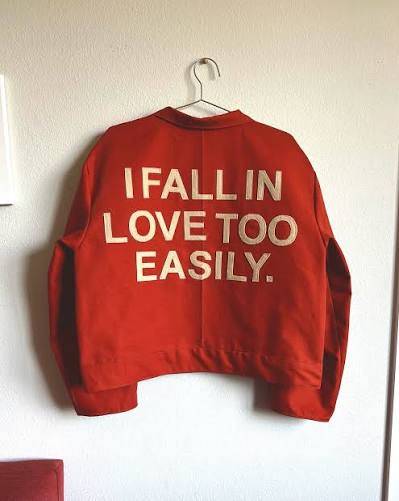

Four months in, and you still don't know what this is. The texting is constant when things are good, funny, warm, almost intense. Then, without warning, it stops for a week. No explanation when it starts back up, just a normal message like nothing happened. You've stopped asking what "this" is, because the one time you did, the texting stopped for two weeks instead of one.
The common belief is that if you're just patient enough, understanding enough, give it enough time, someone like this eventually opens up. The research says otherwise, and it says it plainly enough that it's worth taking seriously before you're a year in instead of four months.
What "emotionally unavailable" actually means, psychologically
This isn't a vibe or a dating-app cliché. It has a real psychological basis in attachment research going back decades. Foundational work on avoidance of intimacy found that people with an avoidant orientation toward closeness tend to suppress their own need for connection and grow genuinely uncomfortable as emotional dependency in a relationship increases [1]. It's not that they don't want connection at all. It's that closeness itself triggers a retreat response, one that often looks, from the outside, exactly like disinterest.
That distinction matters. Someone who's simply not interested in you stops texting and doesn't come back. Someone who's emotionally unavailable often wants the connection genuinely, right up until it starts feeling real, and then pulls back precisely because it does.
The real signs, according to research
TIME published a piece in 2026 compiling signs of emotional unavailability directly from practicing therapists, and the list holds up against decades of attachment literature [2]. The recurring patterns: evasiveness whenever feelings come up directly, active avoidance of defining the relationship or using any label for it, inconsistent or hot-and-cold communication with no clear pattern to when it shifts, using busyness or work as a structural excuse to limit closeness, and a noticeable withdrawal that tends to happen right when intimacy is deepening rather than when things are going poorly [2][3].
Psychology Today has covered the same pattern from multiple angles over the years, consistently landing on the same core signs: an inability or refusal to talk about the future, deflecting when a conversation turns emotionally serious, and a pattern of disappearing that correlates with how well things were actually going, not how badly [3].
Real example: the "almost" relationship
Here's a pattern that shows up constantly and is worth naming plainly, because it's easy to live inside without recognizing it. Someone who's consistent and warm for weeks at a stretch, genuinely great dates, real conversation, enough momentum that it starts to feel like something. Then, right as it would be reasonable to have a conversation about what this actually is, they go quiet. Not a fight, not a stated problem, just distance, for days or a week. Then they come back exactly where they left off, with no acknowledgment that anything happened.
That specific rhythm, closeness followed by unexplained retreat followed by a reset to baseline with no discussion, maps almost exactly onto the withdrawal-when-intimacy-deepens pattern the research describes [2]. It's not random. It's not you doing something wrong that triggers it. It's the retreat response attachment researchers have documented, playing out in real time, on a schedule set entirely by how close things are starting to feel.
Real example: busy as a shield
Here's a second, quieter version. Someone who's technically always available in theory, never actually unreachable, but who has a real, plausible-sounding reason nearly every time plans firm up. Work got busy. Something came up with a friend. They're just wiped this week. None of it is a lie exactly. It's also never resolved, because the busyness isn't actually the obstacle. It's the excuse doing the job avoidance always does, keeping enough distance that things never quite progress past a certain point, while never having to say so directly [2].
The tell isn't any single canceled plan. It's the pattern across months: real reasons, individually reasonable, that collectively add up to a relationship that never quite moves forward, no matter how much patience gets applied to it.
Real example: the future that never gets discussed
A third version, quieter than the first two but just as recognizable: a relationship that's been going on for a while, months, sometimes longer, where any mention of the future gets deflected, gently but consistently. Not a fight about it, not a stated "I don't see this going anywhere." Just a reliable subject change, a joke, a "let's not overthink it," every single time the conversation turns toward what this actually is or where it's headed.
This one is often the hardest to name, because nothing about it feels like rejection in the moment. Deflection is smooth. It rarely feels like a door closing, more like a door that's always slightly ajar, open enough to keep hope reasonable, never open enough to actually walk all the way in. Research on avoidant attachment describes exactly this mechanism: an active discomfort with defining or committing to a relationship that gets managed through deflection rather than confrontation, because deflection doesn't require ever admitting the discomfort exists [2][3].
How to tell the difference from someone who's just genuinely reserved
Not everyone who's slow to open up, cautious about labels, or private about feelings is emotionally unavailable in the clinical sense. Genuine shyness, a recent bad breakup, or simply being new to vulnerability can look similar on the surface. The distinguishing factor researchers point to isn't hesitation itself. It's the pattern over time: does the hesitation gradually ease as trust builds, or does it hold steady, or even intensify, exactly as the relationship gets more serious [1][3]? Someone who's cautious but genuinely available usually opens up more as safety builds. Someone whose caution is closer to true avoidance tends to retreat further the closer things get, regardless of how much safety and consistency the other person provides.
That distinction is the practical test worth applying honestly to any relationship that's felt stuck in the same place for months. Is trust actually building, even slowly? Or does every step toward real closeness get met with a new reason to pull back that wasn't there before?
What the research says this actually costs you
This isn't just an inconvenience. A 2019 meta-analysis in Personality and Individual Differences, synthesizing 132 separate studies across more than 71,000 participants, found that attachment avoidance correlates with lower relationship satisfaction more strongly than attachment anxiety does, a correlation of negative 0.44 compared to negative 0.32 for anxiety [4]. In plain terms: dating someone whose default mode is retreat from closeness predicts worse relationship satisfaction than almost any other single attachment-related factor researchers have measured.
Patience doesn't resolve an avoidant pattern. It usually just extends how long it takes to find out the pattern was never going to resolve on its own.
A separate dyadic study following actual couples found that partners of people with higher attachment avoidance reported measurably lower satisfaction and commitment, and that the avoidant partner's own withdrawal behavior was the specific mechanism driving that outcome, not some unrelated compatibility issue [5]. The cost isn't abstract. It's measured, replicated, and it lands specifically on the partner doing the waiting.
It's worth being precise about what that cost actually looks like day to day, because "lower relationship satisfaction" can sound abstract next to what it actually feels like: months of monitoring your own tone so you don't seem needy, replaying a delayed reply for signs of what it might mean, and slowly, quietly adjusting your own expectations downward until the relationship's baseline becomes whatever level of inconsistency you've learned to tolerate. That adjustment happens gradually enough that it rarely feels like a decision. It just becomes the new normal, one small recalibration at a time.
Why this pattern is so easy to mistake for "just needs time"
Part of what makes this so sticky is a well-documented behavioral dynamic: intermittent reinforcement, reward that arrives unpredictably rather than consistently, produces stronger, harder-to-extinguish behavior than reward that arrives every time. It's the same mechanism behind slot machines. When the good weeks are genuinely good, warm, funny, real, and the bad weeks are unpredictable rather than constant, the unpredictability itself becomes part of what keeps someone invested, waiting for the next good stretch instead of walking away during a bad one.
That's exactly why "just be more patient" is such common, well-meaning, and ultimately counterproductive advice. Patience assumes the withdrawal is a temporary phase to wait out. The research on avoidant attachment suggests it's closer to a stable pattern that shows up specifically in response to closeness, which means more closeness, more time invested, more patience extended, tends to trigger more of the same retreat rather than resolving it.
What actually helps, if you recognize yourself in this
None of this is a diagnosis to hand someone else from across a dinner table. It's a pattern worth recognizing honestly in your own relationships, whether you're the one waiting for consistency or, just as commonly, the one supplying the inconsistency without fully realizing it. Attachment patterns aren't fixed character flaws. They're learned responses, which means they're also responses that can shift, usually slowly, and usually with real awareness and often real support, like therapy specifically focused on attachment.
What doesn't help is more patience applied in the same direction that hasn't worked for months already. If the pattern has held steady, or worsened, despite consistency, honesty, and real effort on your part, the research is fairly clear that more of the same effort is unlikely to be the variable that changes the outcome. That's not a verdict on the other person's worth. It's just what the data says about how these patterns typically move, or don't, over time.
How compatibility-first matching filters for this before you're six months in
Attachment pattern is one of the five dimensions the SPARK Quiz sorts for directly, alongside social energy style, partnership values, relationship vision, and conflict or connection style. That's not incidental. Attachment style is one of the more stable, well-researched predictors of how someone actually behaves inside a relationship once things get real, and it's exactly the kind of information a first date, or four months of hot-and-cold texting, doesn't reliably surface on its own.
Matching on that dimension upfront doesn't guarantee a relationship works. It does mean you're not spending four months, or a year, slowly discovering a pattern that real research says was predictable from the start, if only there'd been a way to know it going in.
That's the practical difference between finding this out on a first date, through a structured question set that's specifically designed to surface it, and finding it out gradually, over months of unpredictable texting, after real time and real feeling have already been invested. Neither version makes the pattern disappear. One of them just costs a lot less to learn.
None of this is about disqualifying anyone permanently, or treating attachment style as a life sentence. It's about knowing what you're actually looking at, early, with real information, instead of assembling the picture slowly over months of unanswered texts and reasonable-sounding excuses.
Take the SPARK Quiz at beyondthesparks.com. Five minutes, and it's built to surface exactly the kind of pattern that usually takes months of hot-and-cold texting to figure out on your own.
We'll see you at Cabin Boys, at Chicken N Pickle, or in Dallas this September, hopefully with better information than the last four months gave you.
Sources
1. Bartholomew, K. (1990). Avoidance of intimacy: An attachment perspective. Journal of Social and Personal Relationships. https://psycnet.apa.org/record/1990-30882-001
2. TIME, "6 Signs Your Partner Is Emotionally Unavailable, According to Therapists," 2026. https://time.com/article/2026/04/03/emotionally-unavailable-partner-signs-therapists/
3. Psychology Today, "Are They Just Not Into You? Or Is It Avoidant Attachment?" 2024. https://www.psychologytoday.com/us/blog/living-forward/202405/are-they-just-not-into-you-or-is-it-avoidant-attachment
4. Candel, O.-S., & Turliuc, M. N. (2019). Insecure attachment and relationship satisfaction: A meta-analysis of actor and partner associations. Personality and Individual Differences. https://www.sciencedirect.com/science/article/abs/pii/S0191886919302673
5. Attachment dynamics and dyadic relationship outcomes, PMC. https://pmc.ncbi.nlm.nih.gov/articles/PMC8336265/
6. Beyond The Sparks, "How the SPARK Profile Predicts Real Chemistry." https://beyondthesparks.com/blog/spark-quiz-compatibility-science
Frequently Asked Questions
Foundational attachment research on avoidance of intimacy shows it's a retreat response triggered by closeness itself, not general disinterest. Someone emotionally unavailable often wants connection right up until it starts feeling real.
According to TIME and Psychology Today coverage of therapist-identified signs: evasiveness about feelings, avoiding labels, hot-and-cold communication, using busyness as an excuse, and withdrawal that happens specifically when intimacy deepens.
A 2019 meta-analysis of 132 studies and more than 71,000 participants found attachment avoidance correlates with lower relationship satisfaction more strongly than attachment anxiety, at negative 0.44 versus negative 0.32.
Attachment pattern is one of the five compatibility dimensions the SPARK Quiz sorts for, surfacing this information before a first date instead of after months of inconsistent texting.
Ready to Find Your Match in Tulsa?
Take the free SPARK Quiz and join us at our next event. Everyone leaves with at least one match.
Next event · Singles Bash: Halloween Game Night for Tulsa Singles · Friday, October 30 · Tulsa · from $25.00 Reserve →
Start Your Free SPARK Quiz →