
There's a scene in the film Materialists where a room full of professional matchmakers toasts a colleague who just got her eleventh client married. The crowd goes wild. It's played for warmth, but it also captures something real: matchmaking, as a profession, is having a genuine cultural moment. [1]
It's not nostalgia. It's a correction. After years of outsourcing dating to algorithms, a growing number of people are concluding that the algorithm was never actually doing the job.
The Numbers That Are Hard to Ignore
Professional matchmakers report a success rate of 70 to 80%, which is significantly higher than the roughly 9% success rate typically associated with dating apps. [1][2] That gap is not a rounding error. It's the difference between a service designed around volume and one designed around outcomes.
Apps are built to keep you engaged, not to get you off the platform. The incentive structure works against you from day one. A matchmaker, by contrast, only succeeds when you succeed. That alignment changes everything about how the service actually functions.
Selective Search, one of the top boutique firms in the U.S., reports an 89% success rate across more than 4,000 relationships. [4] The firms at the high end aren't outliers. They're proof that a different approach produces different results.
What Matchmakers Actually Do That Apps Don't
The reason matchmakers outperform isn't magic. It's intentionality. Matchmakers do the work of filtering that apps hand off to algorithms, except they do it with actual judgment. [3] They push back on clients whose standards have drifted into self-sabotage. They help people figure out what they actually want versus what they think they want.
That distinction matters more than it sounds. Most people walk into the dating market with a list that mixes genuine non-negotiables with superficial preferences they've never examined. A good matchmaker forces that examination. A dating app just shows you more profiles.
There's also the coaching layer that the best services include. Post-date feedback, communication guidance, and honest conversations about patterns that aren't working. This is the part you never get from an app, and often the part people need most. [3]
The Accountability Effect
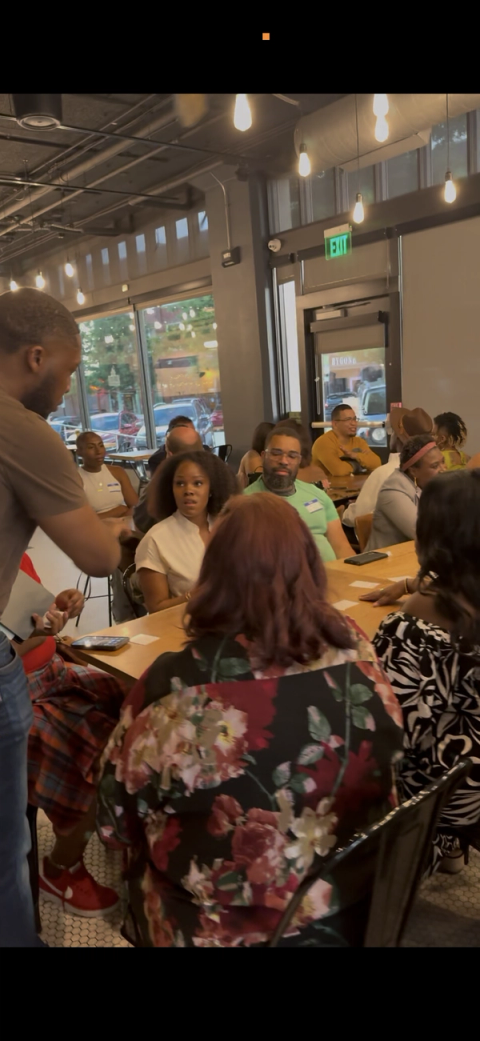
There's also the simple factor of accountability. When a friend or family member sets you up, you show up differently. You're less likely to ghost. You take the introduction seriously because there's a real relationship on the line. Structured events create the same dynamic: everyone in the room is there on purpose, which changes the entire energy. [3]
Matchmaking is a good fit for three kinds of people: those who are burned out from dating apps, those who are too busy to invest real time in dating, and those who aren't sure what they're looking for. [4] Most people who are serious about finding a partner fall into at least one of those categories.
The professional time investment is also worth naming. Dating apps can quietly consume ten or more hours a week in scrolling, messaging, and low-return first dates. [4] That time cost rarely gets calculated, but for anyone billing their hours professionally, it adds up fast.
Honesty Is the Actual Product
The film's director, Celine Song, was briefly a matchmaker herself before becoming a playwright. [1] Her take is worth sitting with: the best matchmakers aren't transaction brokers. They're people who help clients become more honest about what they actually need.
That observation cuts to the core of why matchmaking works when it works. The service itself is less important than what the client brings to it. A person who shows up willing to be genuinely honest about their patterns, their fears, and their actual priorities gives a matchmaker something real to work with. A person who shows up with a rigid checklist and no self-awareness gets a string of introductions that go nowhere.
That honesty about yourself, your patterns, your real non-negotiables versus the ones that are just noise, is what actually moves the needle. A quiz, an event, a structured introduction: all of it is in service of that one thing. [2]
Sources
- The Knot. "Matchmakers Are 'In' Again: We Share Their Success Rate." June 13, 2025. https://www.theknot.com/content/matchmakers
- Psychology Today. "Making Matches the Modern Way." October 21, 2025. https://www.psychologytoday.com/us/blog/the-kaleidescope/202510/making-matches-the-modern-way
- LUMA Luxury Matchmaking. "Matchmaker Success Rate: A Breakdown of the Top Firms." 2025. https://lumasearch.com/blog/matchmaker-success-rate/
- Selective Search. "Matchmaking vs Dating Apps." September 3, 2025. https://www.selectivesearch.com/dating-advice/matchmaking-vs-dating-apps/
Frequently Asked Questions
Ready to Find Your Match in Tulsa?
Take the free SPARK Quiz and join us at our next event. Everyone leaves with at least one match.
Next event · Dallas SINGLES MIXER (Slow Dating > Speed Dating) · Saturday, September 19 · 2965 S. Hwy 161, Grand Prairie, TX 75052 (Located in the EpicCentral entertainment district) · from $35.00 Reserve →
Start Your Free SPARK Quiz →